
Table of Contents
In modern commercial agriculture, drip irrigation water treatment has become essential wherever micro-drip systems draw on hard, mineral-rich groundwater. This guide covers why calcite clogging and topsoil salinity happen, how physical (magnetic/hydrodynamic) water conditioning solves both without chemicals, and what independent, peer-reviewed research actually shows about it.
1. The Agronomic Challenge: Why Groundwater Clogs Drip Emitters
Micro-drip irrigation systems provide precise water and fertigation delivery directly to crop root zones. However, agricultural producers relying on deep borehole groundwater face a persistent, destructive adversary: dissolved calcium carbonate.
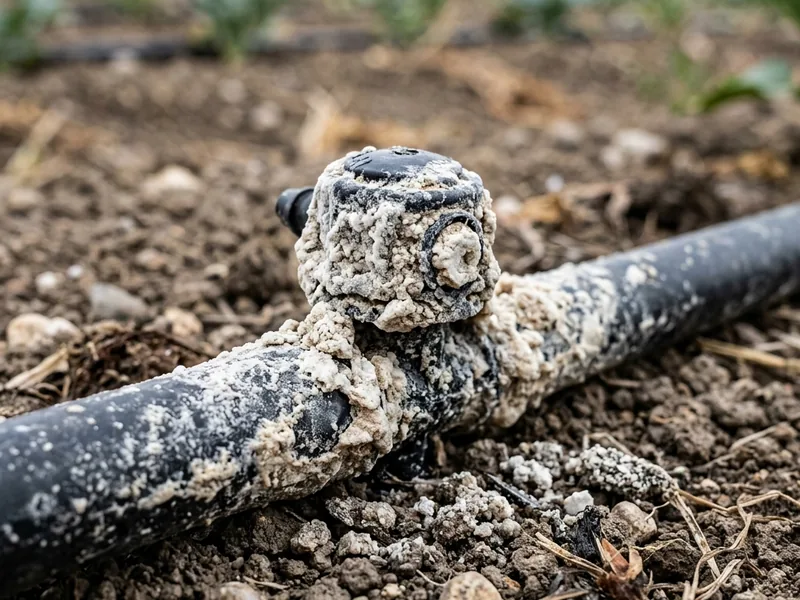
Figure 1: Calcite limescale encrustation choking a micro-drip emitter nozzle after 60 days of operation.
Groundwater extracted from aquifers frequently contains elevated total hardness. Research on drip emitter clogging identifies calcium carbonate as the single most common chemical precipitate behind emitter blockage, forming most aggressively once water pH climbs above 7.0 — exactly the range typical of hard borehole water. As this water travels through narrow irrigation lines and exits tiny emitter orifices, two thermodynamic triggers take place simultaneously:
- Pressure Drop & Carbon Dioxide Release: As water transitions from pressurized underground piping to ambient atmospheric pressure at the emitter, dissolved CO₂ gas rapidly off-gasses, causing dissolved calcium bicarbonate to instantly precipitate out as hard, sticky calcite crystals.
- Evaporative Surface Encrustation: Solar heat at the soil surface accelerates water evaporation, leaving behind thick white mineral crusts on drip lines, spray heads, and topsoil.
- Biological Co-Fouling: Independent clogging research also documents microbial biofilm and extracellular polymeric substance (EPS) build-up compounding chemical scale — the two mechanisms typically occur together, not in isolation, which is why purely chemical fixes often under-perform in the field.
Severe Consequences for Farm Operations
Up to 45% flow reduction within 60–90 days of operation, uneven water delivery across crop rows, topsoil salinity lock that blocks rain percolation, and hazardous acid washdowns that damage soil microbial ecosystems and corrode pump impellers.
2. Soil Salinity & Crusting: The Hidden Yield Risk
Calcite clogging is only half the problem. The same hard, mineral-rich water that blocks emitters also raises the salinity and sodium adsorption ratio (SAR) of the topsoil it irrigates. Where salinity is low but sodicity (SAR) is high, irrigation water actively disperses soil clay particles instead of holding them together — the combination behind the crusted, water-repellent topsoil common around older drip fields.
The agronomic cost of ignoring this is measurable, not theoretical: independent field research on saline irrigation water reports yield reductions of 32–46% under sustained brackish irrigation compared to properly conditioned water, driven by impaired seed germination, restricted root development, and disrupted nutrient uptake. Full technical thresholds for SAR and electrical conductivity (EC) in irrigation water are documented in the FAO guidelines on irrigation water quality.
Why This Matters at the Root Zone
Physically conditioning the water at the pump station — not just filtering it — changes how mineral ions behave before they ever reach the soil, which is the same mechanism that prevents both emitter clogging and surface crusting at once (see Section 3).
3. The Physical Solution: How NEW ARA Ionic Accelerators Work
To eliminate chemical dependency and permanently protect irrigation networks, Vosges Italia engineered the NEW ARA Ionic Accelerator — a heavy-duty physical water treatment system installed directly at the main pumping station or filtration manifold. Read more about the Super Catalyzer platform.
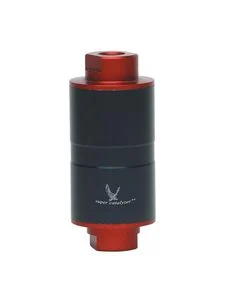
Figure 2: NEW ARA Physical Hydrodynamic & Magnetic Ionic Accelerator (100% Chemical-Free)
Hydrodynamic & Magnetic Force Transformation
Unlike chemical softeners that replace calcium with sodium (which poisons agricultural soils), NEW ARA operates entirely through physical fluid dynamics and magnetic force, in three stages:
Venturi Hydrodynamic Acceleration
Water passing through the device accelerates through calibrated internal chambers, creating localized pressure differential shocks that begin breaking down existing ion clusters.
Permanent Magnetic Field Alignment
High-coercivity magnetic fields break electrostatic bonds holding water cluster molecules together, releasing trapped calcium and carbonate ions so they can no longer bond into hard scale.
Calcite to Aragonite Conversion
Instead of forming hard, cubic calcite crystals that stick to plastic walls, the released ions crystallize into non-adherent, needle-like aragonite micro-powders that flow straight through the emitter.
Active Descaling of Existing Pipe Networks
Because aragonite-conditioned water possesses enhanced physical solvency, passing water gradually dissolves old, legacy calcite deposits already encrusted inside old drip tubes, restoring full original flow rates within 3 to 6 weeks.
4. The Evidence: What Independent Research Shows
The physical/magnetic conditioning principle behind NEW ARA is not unique marketing language — it has been independently studied in peer-reviewed agricultural science literature. These studies evaluate the general technology of magnetic water treatment for drip and fertigation systems, not the NEW ARA unit specifically, but the mechanism and results are directly relevant to any grower evaluating physical water treatment.
| Metric | Result |
|---|---|
| Higher emitter discharge vs. untreated water* | 4.1–29.0% |
| Less clogging-deposit dry mass* | 14–65% |
| Longer emitter flow retention* | 65.8–183.3% |
*Ranges as reported across multiple independent, peer-reviewed studies on magnetic water treatment for drip/fertigation systems; results vary by water chemistry, salinity, and system design:
- Wang et al., “Magnetized Water Irrigation Alleviates Emitter Clogging of a Drip Fertigation System,” Agronomy, 2023
- “Evaluation of saline and magnetized water on emitter hydraulic performance and clogging in drip irrigation,” Scientific Reports, 2024
- “Magnetic field control of composite fouling in anaerobic digestate-fed drip irrigation systems,” Irrigation Science, 2026
5. Key Agronomic & Operational Benefits
By conditioning groundwater physical structure at the pump station, farm operators gain immediate, verifiable benefits across crop yield quality, water efficiency, and equipment lifespan:
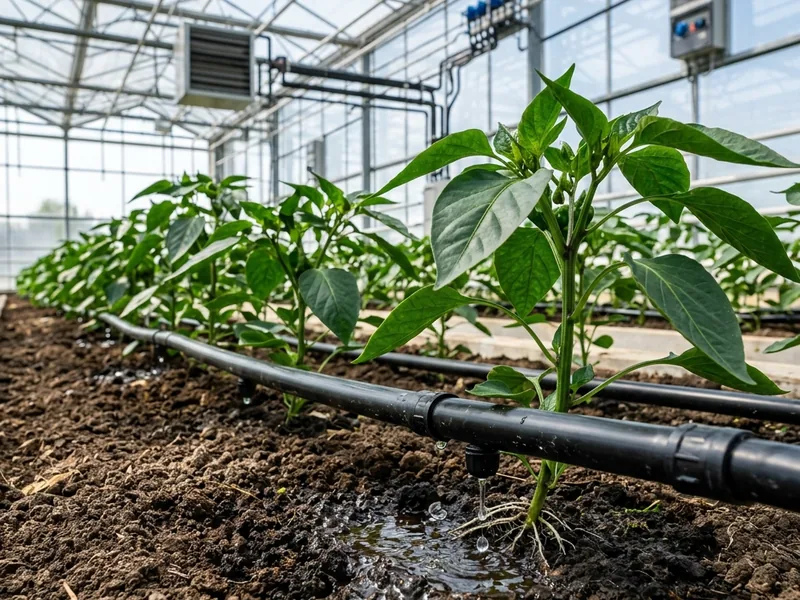
Figure 3: Clean drip irrigation delivery and uniform root zone moisture percolation across greenhouse crops.
6. Physical vs. Chemical Treatment: Which Is Right for Your Farm?
Both approaches solve calcite clogging, but they solve it differently — and the ongoing cost, safety, and maintenance profile of each is very different over a system’s working life:
Chemical Treatment (Acid Washing)
- Requires recurring acid dosing and careful pH monitoring
- Corrodes pump and valve components over time
- Risk of soil microbiome damage from acidic washdown runoff
- Ongoing chemical procurement cost, every season
Physical Water Treatment (NEW ARA)
- Zero chemical consumables — nothing to reorder or store
- 20+ year maintenance-free operating lifespan
- Safe for soil microbiology and drip system components
- One-time installation cost, no recurring spend
For most commercial farms running multiple hectares of drip lines, the physical route pays for itself within the first one to two seasons purely through avoided acid purchases and reduced emitter replacement labor — before even counting the water savings covered in Section 5.
7. Frequently Asked Questions About Drip Irrigation Water Treatment
Does magnetic water treatment really stop emitter clogging?
Yes & independent peer-reviewed studies on drip fertigation systems have measured reduced clogging-deposit mass and improved emitter discharge with magnetized/physically conditioned water compared to untreated water. See Section 4 for the specific studies and figures.
How long does it take to see results after installation?
Most farms see reduced emitter blockage within the first irrigation cycle. Active descaling of legacy calcite already encrusted inside older drip tubes typically restores full original flow rates within 3 to 6 weeks.
Does NEW ARA work with saline or brackish groundwater?
Yes. The hydrodynamic and magnetic conditioning process addresses the same calcium and carbonate ions responsible for both clogging and salinity-driven soil crusting, making it effective on the hard, mineral-rich groundwater typical of borehole irrigation sources.
Is it compatible with fertigation (liquid fertilizer) systems?
Yes. NEW ARA is installed at the main pumping station or filtration manifold, ahead of fertigation injection, and does not interfere with dissolved fertilizer delivery — conditioned water actually improves fertilizer solubility and root uptake.
Does the system need electricity or regular maintenance?
No. NEW ARA uses permanent magnets and passive hydrodynamic geometry, so it draws no electrical power and has no filters or wear parts to replace, with a rated operating lifespan of 20+ years.
Contact us
Connect directly with SARL NEW-ARA, official distributor of Vosges Italia, for technical sizing, custom quotes, or partnership inquiries.